
Data Center Policy Across the 50 States

Draft working paper — the first integrated 50-state survey of data center incentives, land use, and energy policy.

Beneficiary
Date
Work
Draft working paper — the first integrated 50-state survey of data center incentives, land use, and energy policy.

In collaboration with:
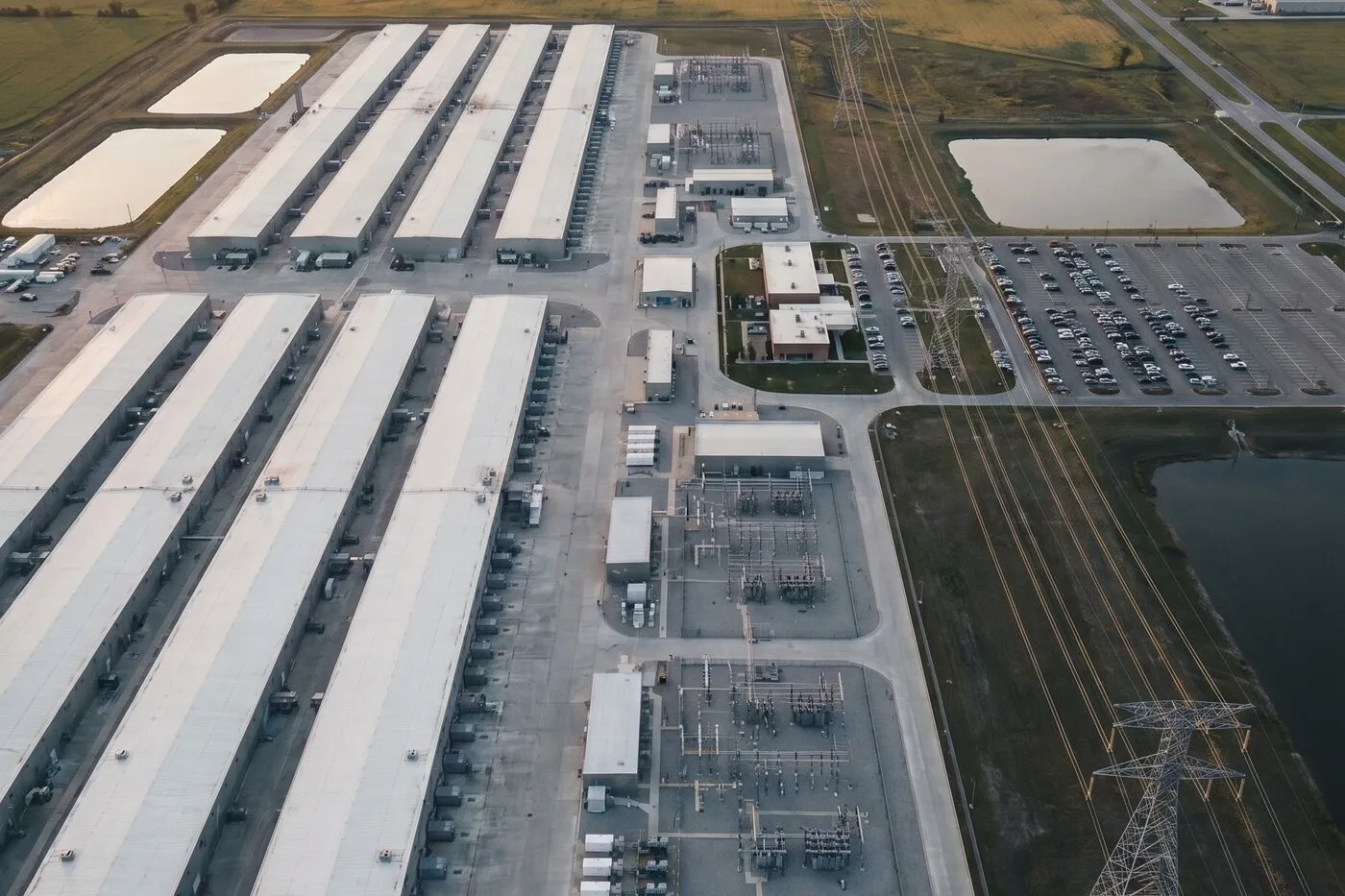
Aerial view of a hyperscale data center complex set in Midwestern farmland with a high-voltage transmission line

Draft Working Paper

This is a working draft (June 2026) circulated for comment. Figures, classifications, and findings are subject to revision. Read the draft (PDF).

Data Center Policy Across the 50 States: A Survey of Incentives, Land Use, and Energy Regulation


This draft working paper presents the first comprehensive 50-state survey of data center policy, integrating five dimensions of enacted state and local regulation with project-level investment data and a scored cross-state typology. It draws on a novel dataset of state legislation, public utility commission proceedings, and project-level records.

Read the Draft Working Paper (PDF): This is a working draft circulated for comment; figures and findings are subject to revision.

Scope and Scale


The survey covers all 50 states as of June 2026:

  • 890 documented projects, with active projects disclosing approximately $1.79 trillion in announced investment and roughly 240 GW of reported power capacity
  • 49 states with at least one data-center-relevant incentive (38 with dedicated data center tax incentives)
  • 34 states containing localities with enacted moratoria (208 local actions in total)
  • 20 states that have rolled back, paused, or tightened incentives since 2024

Five Policy Dimensions


  1. Tax incentives and economic development
  2. Land-use restrictions, moratoria, and local governance
  3. Energy regulation and grid impacts
  4. Environmental and resource constraints — water, noise, and air quality
  5. Federal regulatory overlay — FERC and DOE

Central Findings


  • An incentive–restriction paradox: the same states that offer multi-decade tax exemptions host the localities that impose moratoria. We read this as a vertical mismatch in fiscal federalism, in which the tier of government that captures the benefits is not the tier that bears or perceives the local costs.
  • Energy access, more than tax policy, gates siting: interconnection timing and generation adequacy shape where projects can land, with tax policy operating mainly as a tiebreaker among sites that already have a credible power path.
  • The costs and benefits of development are distributed asymmetrically, with concentrated gains for developers and state treasuries set against diffuse costs borne by ratepayers and host communities.
  • Despite the absence of federal coordination, states with very different market structures are converging on common policy mechanisms, most visibly large-load tariffs with minimum billing demand and long-term contract requirements.

Case Studies


In-depth studies of Virginia, Texas, Georgia, Michigan, and Arizona illustrate how the five dimensions interact in practice, alongside a 50-state policy compendium and a scored typology of incentive generosity and restriction intensity.

Contact us

Want to talk or collaborate?

Don't be shy. We'd love to hear from you.

Subscribe


News and Updates from the ALEA Institute.