
New research identifies 116 infrastructure development moratoria across 30 states, providing the first comprehensive cross-sector survey of how communities are responding to the rapid deployment of data centers, renewables, and battery storage.
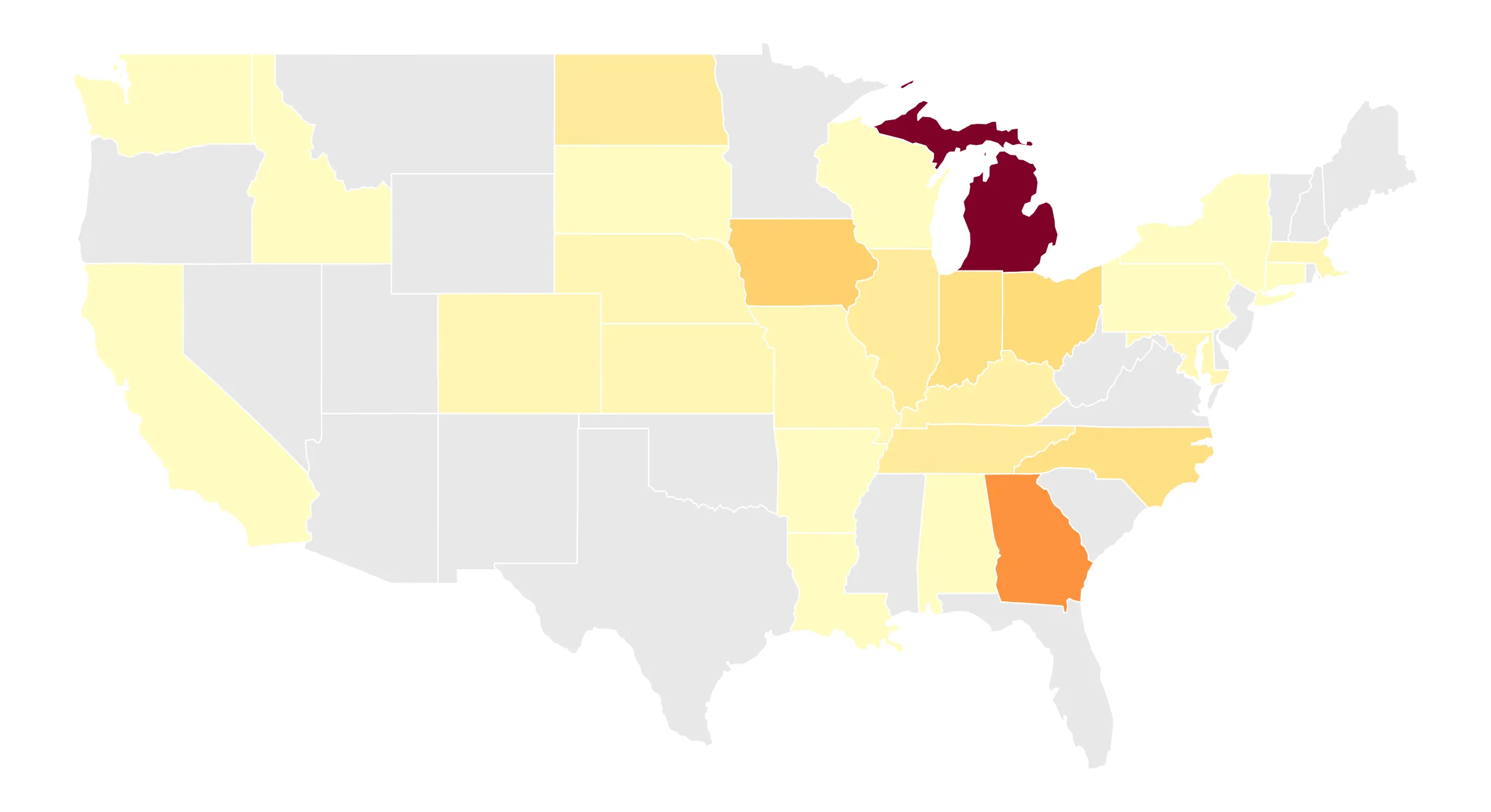
We are pleased to announce the publication of “Moratorium Nation: A Survey of Data Center, Renewable Energy, and Battery Storage Moratoria in the United States”, the first integrated, cross-sector survey of infrastructure development moratoria across the country.
Read the Full Paper
The complete working paper, including a 50-state legal authority reference, clause taxonomy, and model ordinance template, is available on SSRN.
Across the United States, communities are enacting temporary pauses on new infrastructure development at an unprecedented rate. As data centers, solar farms, wind turbines, and battery storage facilities arrive faster than local zoning codes can accommodate, local governments are turning to moratoria as a regulatory catch-up mechanism. Yet until now, no comprehensive resource has existed for practitioners, researchers, or policymakers to understand this phenomenon across sectors.
Our systematic analysis of 116 moratoria across 30 states reveals several striking patterns:
The paper offers four primary contributions for local government attorneys, planning directors, state legislators, and researchers:
A comprehensive catalog of all 116 identified moratoria with structured data on jurisdiction, sector, duration, legal form, and regulatory triggers. The inventory reveals that moratoria are a bipartisan, local-first phenomenon originating from communities across the political spectrum.
A detailed survey of the legal landscape, identifying 13+ states with express moratorium statutes, the majority that rely on implied police power authority, and the handful that prohibit moratoria outright. The variation is sharp: Michigan communities have enacted the most moratoria (26) despite having no express moratorium statute, while Virginia’s strict Dillon’s Rule framework effectively prevents them.
An analysis of 44 clause types across 98 structurally extracted moratorium instruments. The findings reveal significant gaps in current drafting practice: 56% of moratoria lack a definition of the regulated use, 79% lack exemption provisions, and fewer than 10% include sector-specific technical requirements.
A 13-section core template with four sector-specific modules (data centers, battery storage, solar, and wind) that can be adapted to any infrastructure category. The framework addresses the seven most common drafting pitfalls and includes a recommended duration matrix tied to regulatory task complexity.
The paper frames moratoria not as anti-development measures but as a form of structured democratic friction. When existing zoning codes fail to define or regulate an emerging land use, communities face a binary choice: approve projects under inapplicable standards or impose a temporary pause to develop appropriate ones. The moratorium is a tool, not an outcome—and the quality of the outcome depends on the quality of the instrument.
Well-designed moratoria share common characteristics: detailed legislative findings, functional definitions of the regulated use, an “earlier of” sunset pattern (expiring on a fixed date or upon adoption of permanent regulations, whichever comes first), active study obligations, and meaningful exemption provisions.
The full working paper is available on SSRN: