
Moratorium Nation

A cross-sector survey of 116 infrastructure development moratoria across 30 U.S. states.

Beneficiary
Date
Work
A cross-sector survey of 116 infrastructure development moratoria across 30 U.S. states.

In collaboration with:
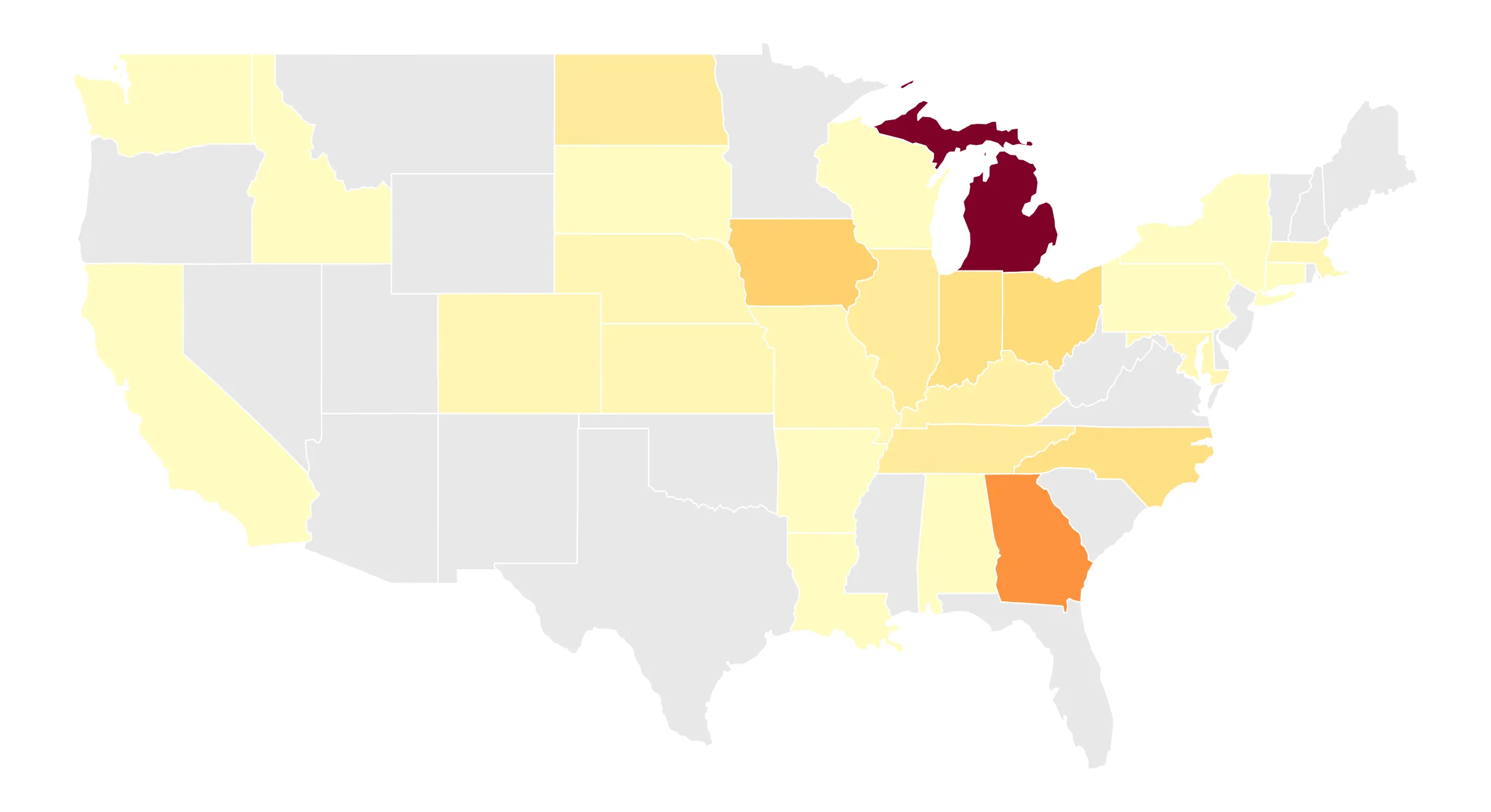
Choropleth map of infrastructure development moratoria by U.S. state

Moratorium Nation: A Survey of Infrastructure Development Moratoria


This paper presents the first integrated, cross-sector survey of infrastructure development moratoria in the United States. Through systematic analysis of 116 moratoria enacted across 30 states, the study documents how communities are responding to the rapid deployment of data centers, renewable energy facilities, and battery storage systems.

Read the Paper on SSRN: Access the full working paper including the 50-state legal authority reference, clause taxonomy, and model ordinance template.

Scope and Scale


The paper identifies and analyzes a phenomenon that has accelerated dramatically: 57 moratoria were enacted in 2025 alone, with 33 more in the first six weeks of 2026. Key findings include:

  • 116 moratoria identified across 30 states as of February 2026
  • 62% target data centers, reflecting $1.1 trillion in announced investment
  • $64+ billion in projects blocked or delayed as of Q2 2025
  • Moratoria cascade geographically, with neighboring jurisdictions acting in rapid succession

Four Key Contributions


  1. Empirical Inventory: A comprehensive catalog of 116 moratoria with structured data on jurisdiction, sector, duration, and legal form
  2. 50-State Legal Authority Analysis: Detailed survey of express moratorium statutes, implied authority, and categorical prohibitions across all states
  3. Clause Taxonomy: Analysis of 44 clause types across 98 extracted instruments, revealing that 56% lack use definitions and 79% lack exemptions
  4. Model Ordinance Framework: A 13-section template with four sector-specific modules adaptable to any infrastructure category

Central Argument


The paper frames moratoria as a form of “democratic friction”—a legitimate regulatory catch-up mechanism where existing zoning codes have not kept pace with emerging land uses. Well-designed moratoria (with detailed findings, functional definitions, active study plans, and sunset provisions) serve the public interest while minimizing legal and economic disruption.

Contact us

Want to talk or collaborate?

Don't be shy. We'd love to hear from you.

Subscribe


News and Updates from the ALEA Institute.