
The November 2026 revision updates the inventory, legal reference, and model ordinance, adds ballot measures, and corrects the earlier clause analysis.
The second edition of Moratorium Nation is available. Dated November 13, 2026, the working paper updates the data, legal discussion, figures, and model ordinance. It also adds ballot measures and corrects the earlier analysis of moratorium clauses.
Read the second edition (PDF) or search the records on the dashboard.
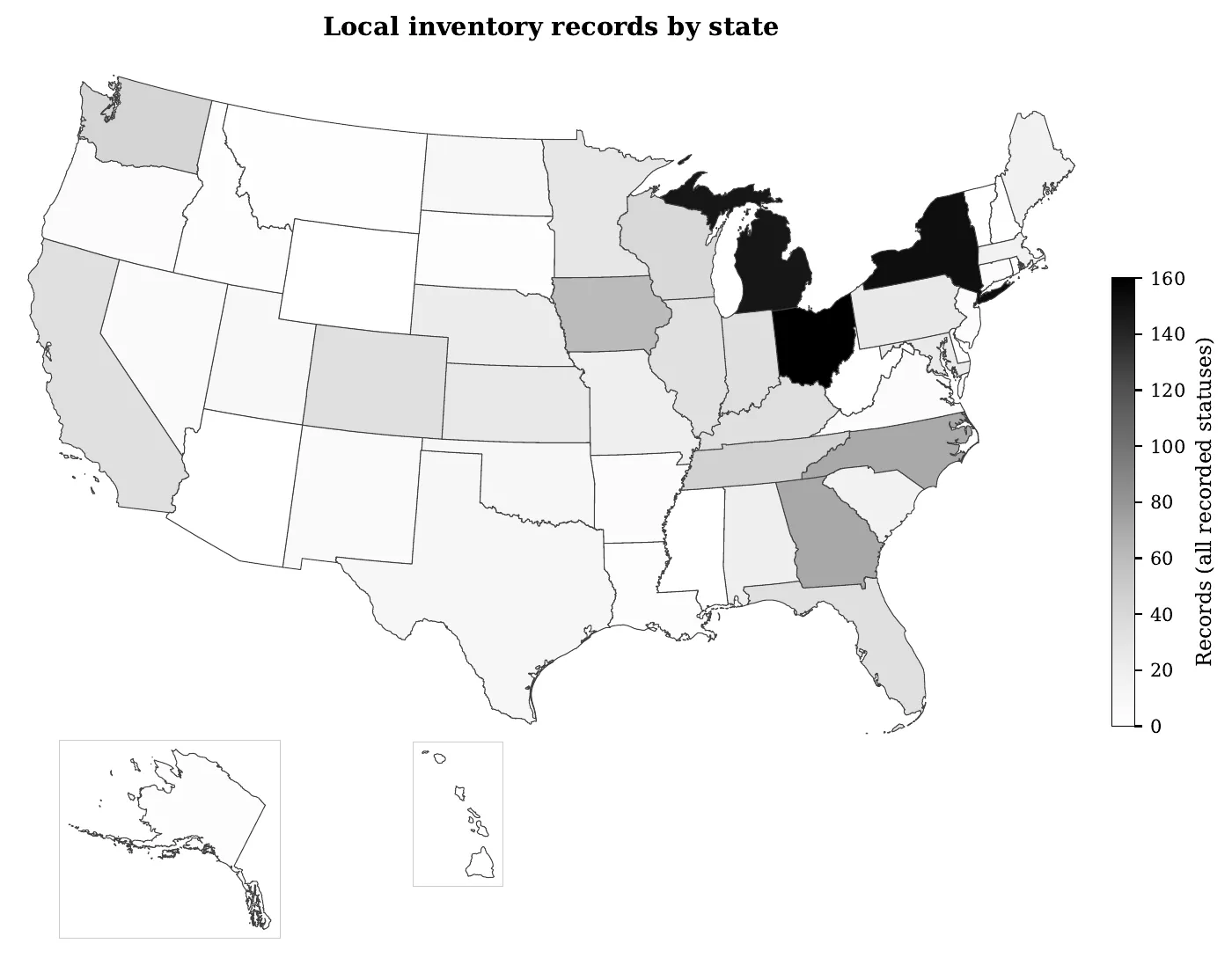
The paper now covers 1,329 local records in 47 states, alongside 449 state-policy records and 57 ballot measures. Local records concern data centers, battery storage, solar, wind, cryptocurrency mining, and other development restrictions. Ohio has 160 local records, New York 152, and Michigan 148.
These totals include proposals and actions that have ended. They do not mean that 1,329 moratoria are currently in force. The inventory has grown through discovery of older actions and corrections as well as new reports, so the change from the first edition is not a measure of the rate of adoption.
Ballot measures need separate treatment. Voters may be asked about a temporary pause, a permanent restriction, or a zoning change. The data distinguishes the question, the reported vote, certification, and any implementing law. It retains 53 current result reports for 52 measures; five reports are marked certified. A certified vote does not necessarily mean a restriction is in effect.
The fifty-state reference identifies what each reviewed source covers. A rule for municipalities may not apply to counties. A restriction on one sector may not govern another. A statutory initial term may come with separate extension and renewal limits.
The revised model ordinance keeps thirteen core sections and four sector modules. It asks drafters to verify authority, application deadlines, protected rights, and adoption procedures before selecting provisions. No template clause or duration guarantees that a moratorium is lawful.
The earlier editions reported percentages of instruments with or without particular clauses. On review, the extraction cohorts contained unrelated documents, summaries, and duplicates. A model confidence score did not screen out those problems. A missing field in a summary also did not prove that the legal instrument lacked the clause.
The second edition withdraws those clause-prevalence estimates. It uses six reviewed texts as examples of definitions, exceptions, study requirements, and sunset provisions. Those examples support discussion of drafting choices, without a claim about national prevalence.
The research page links to the paper, data, and source-review record. The first edition on SSRN remains a separate version; the November revision is hosted on this site.