A revised infrastructure moratorium survey covering 1,329 local records in 47 states, state policy, and ballot measures.
The second edition of Moratorium Nation: A Survey of Data Center, Renewable Energy, and Battery Storage Moratoria in the United States is dated November 13, 2026. The 110-page working paper updates the inventory, legal reference, tables, figures, case studies, and model ordinance.
Download the second edition (PDF) · Explore the dashboard · Read the announcement
| November 13, 2026 snapshot | Count |
|---|---|
| Local records | 1,329 |
| States with local records | 47 |
| State-policy records | 449 |
| Ballot measures | 57 |
These are separate totals. Local records include adopted moratoria, proposals, and actions that have ended. State records include bills and other actions. Ballot questions can concern temporary restrictions, permanent restrictions, or zoning changes. None of these totals is a count of laws confirmed to be in force.
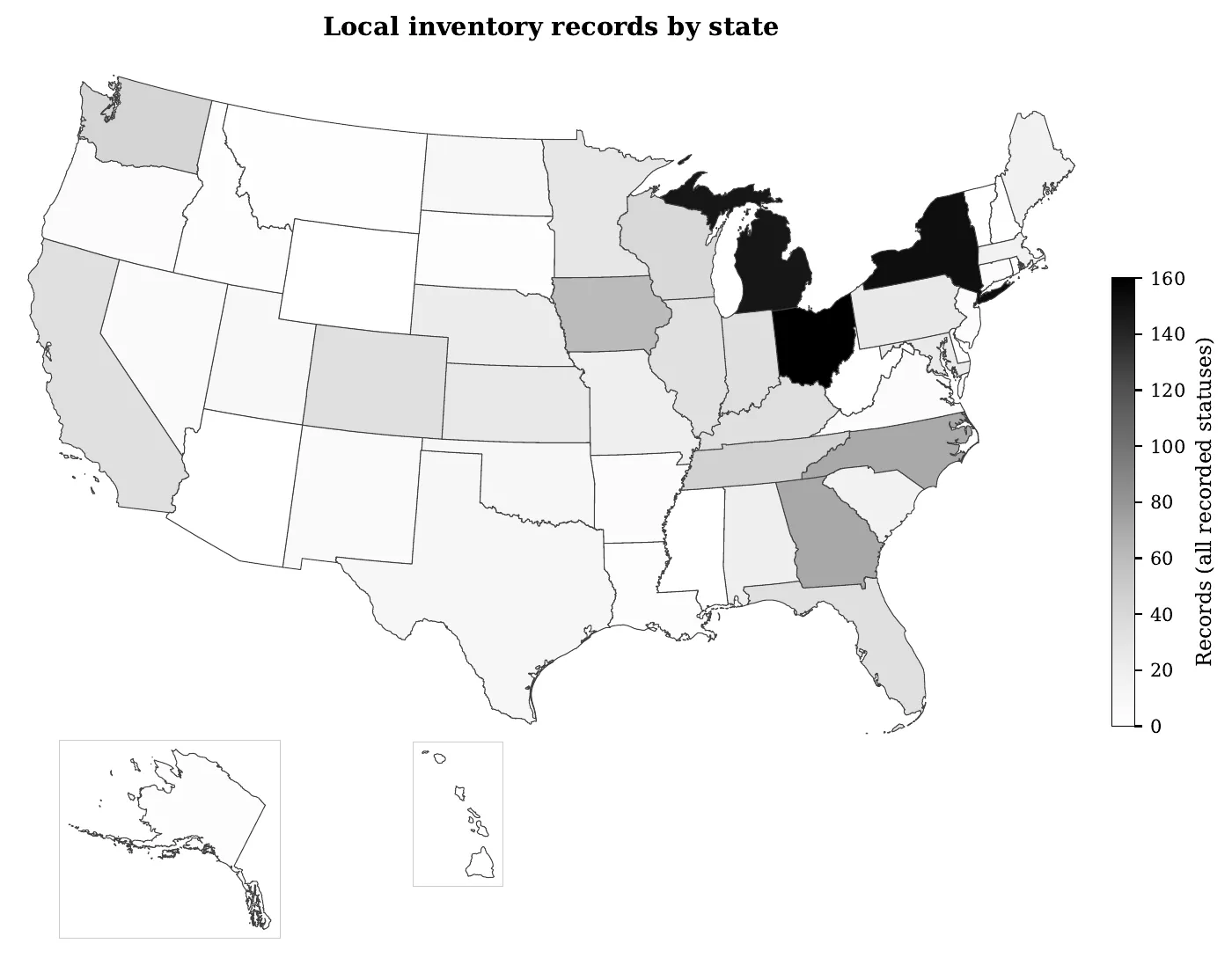
The inventory lists data centers in 1,101 local records, battery storage in 256, cryptocurrency mining in 173, solar in 105, and wind in 52. A record can cover several sectors. Ohio has 160 local records, New York 152, and Michigan 148.
The paper separates ballot questions, reported results, certification, and legal implementation. There are 53 current result reports for 52 measures, including five reports marked certified. A measure can have reports from more than one area. Certification of a vote does not by itself establish that a restriction has taken effect.
The fifty-state reference now describes the scope of the legal sources reviewed. A statute may cover a particular government, approval, planning stage, or sector. General zoning authority is not treated as automatic authority to suspend applications. The model ordinance retains thirteen core sections and four sector modules, with clearer checks for authority, deadlines, extensions, and existing rights.
This edition also corrects the earlier clause analysis. The extraction cohorts included unrelated documents, summaries, and duplicates, so the paper withdraws their clause-prevalence percentages. Six reviewed source texts now illustrate drafting choices. They do not establish how common a clause is nationwide.
The paper repository includes the manuscript, pinned data, source-review notes, generation scripts, and validation results. The dataset repository provides source-linked records and downloads.
Coverage is uneven, and some operative dates and later actions remain unresolved. The paper does not estimate national adoption rates, project delays, or the economic effect of moratoria. Growth in the inventory reflects new discoveries and corrections as well as newly reported actions.
The first-edition research page and SSRN record remain available. The November revision is hosted here; it has not replaced the SSRN file.
Don't be shy. We'd love to hear from you.